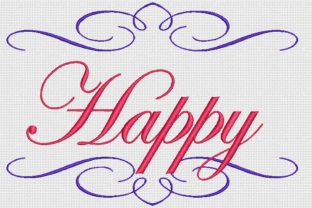
The Happy Embroidery Design: A Professional Review for Branded Merchandise
As an embroidery designer working with small businesses, I see countless logos and motifs. The simple word Happy in Edwardian Script lands differently. It’s not just a word; it’s a complete brand sentiment. This design immediately feels elegant, classic, and surprisingly friendly. The flowing script brings a handmade, premium touch that can elevate any product. For a café, boutique, or creative studio, this isn’t mere decoration—it’s a direct communication of your brand’s core emotion.
First Impression: Elegance Meets Approachable Branding
Edwardian Script has a timeless quality. It avoids being overly ornate or stiff, instead offering a graceful flow that reads as both professional and warm. This is crucial for small business merchandise. A florist or bakery using Happy on an apron isn’t just labeling a uniform; they are inviting customers into a positive experience. The design feels less like a corporate logo and more like a signature—a perfect balance for handmade brands and Etsy sellers who want to project quality and authenticity.
Real-World Business Applications: From Patches to Product Labels
The true test of any embroidery design is its performance across various applications. Happy is versatile, but its success depends on thoughtful application.
Uniforms, Aprons, and Professional Apparel
For staff uniforms or work shirts, Happy as a chest logo or sleeve detail is excellent. The script is clear and legible at a moderate size, reinforcing a cohesive brand identity. On a chef’s apron in a bakery or a barista’s apron in a café, it adds a touch of personality without clutter. It transforms standard apparel into branded assets that build customer trust and recognition.
Branded Patches for Merchandise and Gifts
As an embroidered patch, Happy has significant potential. Patches can be applied to tote bags, caps, or even as product packaging accents for a boutique. A pet brand could use a Happy patch on a leash or toy bag. For event merch or customer gifts, a patch with this sentiment is a memorable, value-added item. It increases product value and fosters buyer engagement.
Cap Fronts and Tote Bag Marks
On cap fronts, the flowing script can work beautifully, but careful testing is needed due to the curved surface. For a tote bag, it makes a elegant, understated mark. This is ideal for a creative studio or handmade shop selling branded totes—it’s decorative but also communicates the brand’s ethos directly.
Strategic Considerations for Optimal Results
While Happy is adaptable, certain scenarios require extra attention to ensure a perfect finished product.
Small Patch Sizes and Detailed Lettering
The elegance of Edwardian Script relies on its detail. If you plan to create a very small patch—for instance, under 2 inches—the fine curves and connections may become lost or overly dense. Always test the embroidery file at your intended patch size first. High stitch density in a small area can lead to stiffness and fabric puckering.
Thread Color Contrast and Fabric Texture
This design thrives on contrast. On dark uniforms or fabrics, a bright, clean thread color is essential for legibility. Conversely, on light fabrics, a darker thread can make it pop. Always test on the real fabric you’ll use. Textured fabrics like canvas for tote bags may require a heavier stabilizer to keep the script crisp.
Commercial Projects and Client Approval
For any commercial embroidery project, creating a printable mockup for client approval is a best practice. Show how Happy looks beside their other design assets to ensure visual consistency. Furthermore, always confirm the commercial licensing terms of the digital embroidery file before production. The product description notes it comes with multiple embroidery file formats, but specifics on license should be verified.
Professional Embroidery Designer Notes
Before running this design for any business use, follow these practical steps to guarantee quality.
- Start Simple: Test Happy in black thread on white fabric and white on black. This reveals the true form and any potential spacing issues without color distraction.
- Hoop and Stabilize Correctly: Confirm the appropriate hoop size for your intended application. Use a stabilizer suitable for your base fabric—especially for items like caps or bags that will see movement.
- Check Small-Scale Performance: Embroider a sample at the smallest size you intend to use (e.g., for a cap front or tiny product label). Inspect the stitch density and clarity.
- Simulate Real Use: If the merchandise will be washed frequently, test a sample through several wash cycles to check for thread integrity and design stability.
- Review File Formats: The design supports multiple embroidery machines. Ensure you are using the correct file format for your specific machine to avoid stitching errors.
Building Brand Identity with a Single Word
Ultimately, Happy is a powerful, minimalist design asset. For a small business, embedding this word into your merchandise—on aprons, patches, or tote bags—does more than adorn. It consistently reinforces a positive brand personality. It makes professionalism feel approachable. It can turn a simple work shirt into a tool for customer connection and turn a handmade product into a story. In the category of Awareness Inspiration, this design lives up to its name: it inspires a feeling, and that feeling becomes synonymous with your brand.
As a final note, while this review covers visual personality and business use, remember that successful embroidery depends on precise technical details. The product description provides key information about file formats and machine compatibility. As a professional, your next step is to check the exact stitch count, recommended hoop sizes, and any included guidelines before moving into full production. With that due diligence, Happy in Edwardian Script can become a joyful and profitable cornerstone of your small business merchandise.